
Have you ever wandered through those gleaming supermarket aisles, staring at rows of colourful bottles that promise miracles? Each one costs more than your morning coffee. Meanwhile, tucked away in your pantry sits a humble ingredient that hides surprising benefits.
The most powerful tools sometimes wear the simplest disguises, waiting patiently on kitchen shelves for someone curious enough to unlock their potential.
In this guide, we’ll show you how to turn those humble kitchen ingredients into powerful, eco-friendly cleaning solutions that keep your home sparkling.
Gathering the Essential Ingredients
Before we get into the nitty-gritty of recipes, let’s chat about the real MVPs of homemade cleaning. These everyday ingredients are total powerhouses when it comes to tackling stains.
Vinegar
This kitchen staple is basically magic in a bottle. Its acidity breaks down soap scum, dissolves mineral buildup, and kills a surprising number of germs.
Unlike those industrial-strength cleaners that make your eyes water, vinegar does its job without turning your home into a hazmat zone.
Grandmothers everywhere swore by vinegar for everything, and they were onto something. It cuts through grease with ease and leaves surfaces actually clean, not coated with residue that attracts more dirt later.
Baking Soda
This white powder sitting in your cupboard is probably the gentlest scrubber you will ever find. It lifts dirt without scratching surfaces, which makes it perfect for everything from bathroom tiles to stainless steel sinks.
It doesn’t just clean—it neutralises odours. Unlike those artificial “fresh linen” sprays that merely mask smells, it eliminates them at the source. It’s a game-changer for pet owners and anyone with teenage boys.
Essential Oils
Many of these oils pack an antimicrobial punch while making your cleaning routine a lot more enjoyable.
Tea tree oil, for instance, is brutal against mould and bacteria, while lavender offers more than a pleasant scent. It brings antiseptic power too. Lemon oil is a natural degreaser that leaves everything smelling fresh.
Castile Soap
Made from plant oils instead of harsh detergents, castile soap cleans thoroughly without leaving that sticky film some soaps do. It’s versatile enough for floors, dishes, and pretty much every surface that needs a bit of a scrub.
The environmental aspect is huge too. It breaks down naturally instead of polluting waterways with synthetic chemicals.
Making an All-Purpose Cleaner
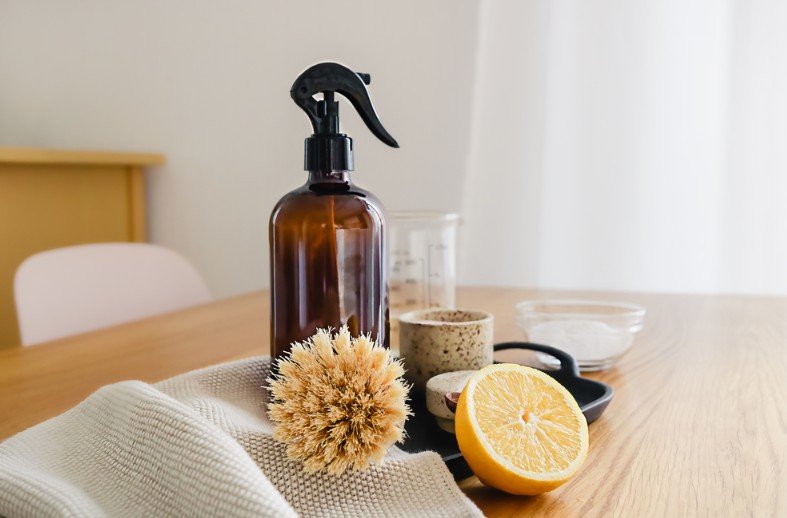
This is where most people should start. One bottle handles about 80{9a55f7f657bdb32d1ae108c710bdd923219d4839f84eb49fb995a88690968226} of cleaning needs, and it takes maybe two minutes to make. You’re going to need 1 cup of white vinegar, 1 cup of water, an empty spray bottle, and a funnel.
Pour both liquids into your spray bottle. Use a funnel to prevent any accidental spills. Then, give it a good shake, pop on a label with the date, and you’re done.
This mixture works on kitchen counters, bathroom sinks, mirrors, and most surfaces without breaking a sweat. The vinegar smell disappears as it dries, leaving things clean instead of just perfumed.
Store it somewhere cool and dark, as heat will break down the vinegar’s effectiveness, and nobody wants a weak cleaner when dealing with sticky messes.
Keep a few bottles ready to go, so when spills happen, you can clean up fast without the scramble.
Mixing a Heavy-Duty Scrubber
Sometimes, gentle cleaning doesn’t cut it. Burnt-on food, soap scum, and mystery stains need something stronger. This is where the baking soda paste comes in.
Basic Recipe
Start with half a cup of baking soda in a bowl. Add water slowly while stirring until you get a thick paste consistency. You’re aiming for a thick, spreadable paste, more like toothpaste, not runny like soup.
For extra cleaning power, swap some of the water for white vinegar. The fizzing reaction should help lift stubborn spots.
Fragrance and Benefits
Drop in about 10 drops of essential oil. Lemon works great in the kitchen because it cuts grease and smells clean. Tea tree oil is ideal for bathrooms, where it helps keep mould and mildew under control.
For a relaxing, spa-like vibe in living areas or bedrooms, try lavender or eucalyptus. They add a soothing scent and bring gentle antibacterial benefits to the space.
Application Method
Spread the paste on the trouble spot and let it sit for 10-15 minutes. That bit of downtime is crucial. It gives the baking soda time to work its magic. Next, scrub with a damp sponge or cloth.
This mixture tackles everything from oven grime to bathtub rings. It’s gentle enough not to scratch surfaces but tough enough to handle serious messes. Also, unlike commercial scrubbers, you can use it around food prep areas without worrying about chemical residue.
Once you’ve handled the heavy-duty messes, it’s time to deal with the smaller, trickier stains that tend to show up on fabric and upholstery.
Preparing Spot Cleaners
For small stains or spills, a simple DIY cleaner will help you tackle tricky spots on carpets, upholstery, and even fabric-covered furniture without harsh chemicals.
You can make a spot cleaner by mixing a half cup of warm water with 1 teaspoon liquid castile soap and a few drops of lavender or lemon essential oil. Apply a small amount to the stained area, let it sit for a minute, then blot gently with a clean cloth until the stain lifts.
For those stubborn spots, just go over them again, always starting from the outside so you don’t accidentally turn a small spill into a bigger mess.
This mix does its job quietly but effectively, lifting stains while leaving a fresh, natural scent. It’s perfect for everyday pet mishaps or the occasional clumsy coffee spill.
And if a mess ever gets out of hand, professional flat cleaning services can step in to tackle it quickly using safe, eco-friendly products.
Creating Natural Air Fresheners
You don’t need artificial sprays or overpowering scents to get your home to smell fresh. A few drops of the right essential oil is all you need to achieve that, and you can mix and match depending on the room or mood.
- Tea Tree Oil. Add a few drops of this oil into a water bottle, and you’ll have an effective air freshener. It’s perfect for bathrooms, laundry areas, or any spot that needs a little extra freshness.
- Lavender. Calming and gentle, lavender turns bedrooms and living areas into relaxing, lightly scented spaces. It’s especially useful when you want a serene, cosy vibe.
- Citrus Oils. Lemon, orange, or grapefruit add an instant burst of energy. Great for kitchens or anywhere you want a bright, clean scent that lifts the mood.
- Eucalyptus. It gives a crisp and refreshing feel to any room. Eucalyptus keeps spaces smelling clean and also helps keep insects away. Try it in linen sprays or around doorways for a subtle, natural boost.
No need to breathe in mystery chemicals. A few drops, a quick shake, and suddenly your home smells like a fancy spa, finally masking the evidence of last night’s dinner or the kid’s craft project.
Conclusion
Here’s what’s really amazing about this whole thing. Most people assume homemade means inferior. They expect watered-down performance from DIY cleaners. Then they try them and realise these simple mixtures often outperform their expensive commercial versions.
There’s no need for special trips to speciality stores. You won’t have to wonder about ingredient safety. And best of all, there’s no more sticker shock at checkout. Instead, you get effective, affordable cleaning solutions that do exactly what they promise.