
Artificial intelligence (AI) has become one of the most talked-about technologies in recent years. From self-driving cars to predictive healthcare, it is no longer just a futuristic concept. It is shaping how we live and work right now. Supporters point to AI’s ability to analyze massive amounts of data, learn from patterns, and automate tasks with incredible precision. Critics worry about job losses, ethical gray areas, and whether human oversight can keep up with machines that “think” faster than people. Both sides of the debate are worth listening to, but one thing is certain: AI is not slowing down. Businesses everywhere are figuring out how to embrace it without losing the human touch.
This shift is not limited to high-tech industries or Silicon Valley startups. AI is finding its way into fields many people do not expect, including cleaning. Commercial cleaning has long been thought of as a labor-intensive industry, dependent on hands-on effort and personal oversight.
As Todd Jones, owner and operator of Office Pride Commercial Cleaning Services in Virginia, explained in a recent interview, AI is “changing the face of the cleaning industry” by bringing tools like apps, geofencing, autonomous machines, and data-driven reporting into everyday operations. What was once an industry focused mainly on brooms and mops is now experimenting with robotics, Internet of Things (IoT) systems, and AI-powered management platforms. The result is more efficiency, stronger safety practices, and new opportunities for cleaners themselves.
How AI Is Protecting Cleaning Companies
Cleaning may look routine on the surface, but for businesses that manage dozens of employees across multiple locations, the work is anything but simple. The challenge is not always in the tasks themselves but in making sure they are done consistently, safely, and on schedule. Artificial intelligence is starting to transform how cleaning companies tackle these responsibilities. Rather than replacing workers, AI is helping businesses create systems that protect their teams, improve oversight, and strengthen trust with clients.
Todd Jones, the owner and operator of Office Pride Commercial Cleaning Services in Virginia, has seen this transformation firsthand. In a recent interview, he explained that “the trick is not that tasks are complicated, it is managing them through a large group of people.” For commercial and residential cleaning companies, that management is often stretched across entire cities or regions. AI is filling in the gaps, allowing managers to oversee teams with the same level of control and visibility as if everyone were working under one roof.
One of the most effective tools has been app-based technology. As Jones explained, many companies now provide employees with mobile apps that allow them to clock in and out, access payroll information, and communicate directly with supervisors. “That app actually allows them to interface with our company in all aspects,” he said. This gives workers more autonomy while giving managers real-time updates. If a team member is late, a notification can be sent immediately. If a job is completed, the app verifies it with a digital record. The result is fewer gaps in communication and more accountability across dispersed teams.
The system goes further with geofencing and QR code scanning. In large facilities, employees can scan designated areas like restrooms or breakrooms to confirm when cleaning has taken place. Managers can then track workflow remotely, which builds confidence with clients and also supports safety. As Jones described, if a worker has not moved for an unusual amount of time, the app can trigger an alert so supervisors know to check in. For cleaning companies, this means better protection for their staff and stronger proof of service for customers.
Key ways AI-powered tools are supporting cleaning businesses include:
- Clocking in and out through geofenced job sites
- Real-time progress tracking with QR and NFC codes
- Automatic alerts when a worker stalls or needs help
- Direct communication between teams and managers through mobile apps
- Immediate reports that verify service completion for clients
By integrating these tools, commercial and residential cleaning companies can operate with more consistency, keep workers safer, and deliver the transparency clients increasingly expect. As Jones put it, this technology is “a game changer” that has already made older systems like paper timecards and phone-based sign-ins obsolete.
Why Embracing AI Matters for Cleaning Companies
AI might sound exciting on paper, but adopting it in the cleaning industry is not always smooth. For many business owners, the first hurdle is mindset. Todd Jones explained that some employees and managers are hesitant when they hear about robots or automated systems taking on jobs like vacuuming. “They are the first to object to it,” he said, describing how tradition and habit can create resistance. This is not unique to cleaning. In nearly every industry, people are cautious when technology changes the way they have worked for years. For cleaning companies, overcoming this resistance often requires reassurance that AI is not a replacement for people but a tool to make their work safer and more effective.
The second challenge is cost. Implementing AI-driven systems comes with an upfront price tag, whether it is purchasing robotic scrubbers, outfitting teams with app-based platforms, or integrating IoT devices into facilities. Jones emphasized that while the initial investment may be higher, companies need to look at the long-term picture. By improving efficiency, automating repetitive tasks, and reducing errors, AI can save money over time. For companies serving large facilities, even small improvements in scheduling, resource use, and safety can add up to significant savings.
What often gets overlooked is that adoption is not just about hardware or software. It is about the culture of a company. Businesses that encourage innovation and provide training are far more likely to see benefits than those that treat AI as a quick fix.
Industry associations play a role here too. Jones highlighted ISSA, the cleaning industry’s leading trade association, as a vital resource for learning what is coming next. ISSA brings together manufacturers, service providers, and technology companies under one roof, creating an environment where cleaning businesses can see emerging AI tools in action before deciding to invest. At conferences and trade shows, managers can test autonomous scrubbers, review the latest app-based workforce management platforms, and hear case studies from companies already using these technologies successfully. The association also provides training courses and certification programs that help cleaning businesses not only understand how AI works but also how to integrate it responsibly and profitably. Peer-to-peer networking is another advantage, since it allows owners and managers to learn from others who are facing similar challenges with labor, costs, and client expectations. Jones explained that knowledge-sharing is essential because the industry is moving quickly. Companies that make use of ISSA’s resources are better equipped to evaluate risks, identify opportunities, and plan their next steps. Those that embrace AI with open communication and the willingness to adapt are the ones most likely to thrive.
How AI Supports Greener and More Efficient Cleaning
AI is not only transforming how cleaning companies manage their teams and tasks, it is also reshaping how they think about sustainability. The industry has always struggled with balancing thorough sanitation against the heavy use of water, chemicals, and energy. With AI-driven tools, businesses can reduce waste while keeping standards of hygiene at the highest level.
One of the biggest advantages comes from AI’s ability to analyze real-time data. Smart sensors track foot traffic, air quality, and even the buildup of dust on surfaces, which means cleaning tasks can be performed based on actual need instead of rigid schedules. A lightly used conference room might only require attention once a week, while high-traffic restrooms or cafeterias could trigger immediate alerts for cleaning. This targeted approach not only cuts down on unnecessary chemical and water use but also lowers energy demands. In practice, that means fewer wasted resources and a smaller environmental footprint.
Of course, there is a flip side. AI itself is not without environmental costs. Data centers and advanced robotics consume energy, and the production of high-tech equipment leaves its own carbon footprint. But this is where the conversation gets interesting. If cleaning companies adopt AI thoughtfully, the resource savings can outweigh the environmental cost of the technology itself. Using fewer harsh chemicals, cutting water waste, and optimizing power use across dozens of sites can balance out the extra energy spent on AI tools. The key is not to treat AI as a silver bullet but as one piece of a bigger sustainability strategy. When paired with smart purchasing decisions and greener products, AI becomes a force multiplier. It not only drives efficiency but also signals to clients and communities that a company is serious about protecting both people and the planet.
Breaking Down AI in Action
Autonomous Cleaning Robots
One of the most visible examples of AI in the cleaning industry is the rise of autonomous cleaning robots. These machines are no longer futuristic prototypes. They are already operating in airports, hospitals, office buildings, and retail centers across the globe. Unlike traditional vacuum cleaners or scrubbers, these robots use AI-powered navigation systems to map their environment, avoid obstacles, and adjust their cleaning routes in real time.
The appeal is clear. Robots can consistently cover large floor areas without getting tired or off schedule, and they deliver the kind of reliability that clients notice. For cleaning companies, this means fewer gaps in service and more confidence that standards will be met every single day.
The numbers back this up. According to a report from MarketsandMarkets, the global cleaning robot market is projected to grow from 4.4 billion dollars in 2020 to more than 12 billion dollars by 2025. That growth is driven not only by convenience but also by the financial advantages. Robots lower labor costs by taking over repetitive jobs, and they also improve consistency, which is a major selling point for commercial clients.
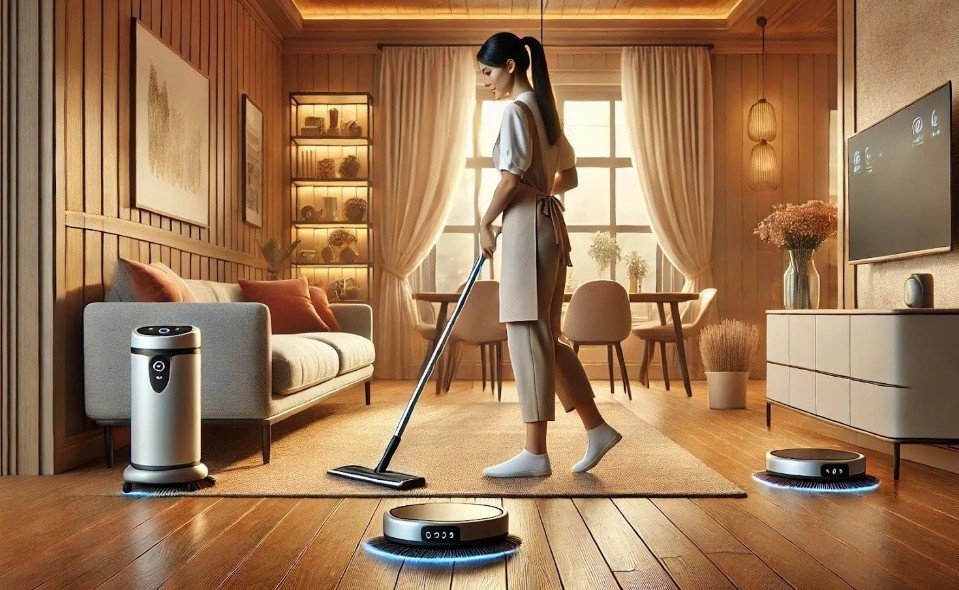
That does not mean robots eliminate the need for people. Humans still play a critical role in supervising these machines, responding to alerts, and performing detailed cleaning tasks that require judgment or finesse. The robot may scrub a massive floor, but a technician ensures it is done correctly, troubleshoots issues, and fills in the gaps. This collaboration reduces strain on workers while allowing companies to reallocate staff to higher value tasks.Cleaning companies that adopt them gain both efficiency and credibility, showing clients that they are forward thinking and equipped to handle modern demands.
Smart Sensors and IoT Integration
Another area where AI is making a big impact is in the use of smart sensors and Internet of Things (IoT) platforms. These technologies allow cleaning companies to monitor spaces in real time, using sensors that track occupancy, air quality, and even surface cleanliness. Instead of cleaning on a rigid schedule, companies can deploy staff and equipment based on actual demand. For example, a restroom that registers high traffic may trigger an alert for immediate service, while an unused conference room can be skipped until needed. This shift turns cleaning from a repetitive routine into a data-driven service.
The benefits extend to efficiency and sustainability. Smart sensors reduce wasted labor hours, lower chemical use, and cut down on water consumption by targeting areas that actually need attention. Waste management sensors, for instance, can signal when bins are nearing capacity, preventing overflow while avoiding unnecessary trips.
This not only saves time but also improves client satisfaction by keeping facilities visibly well maintained. The more companies integrate these tools into daily operations, the more they can demonstrate transparency and accountability with clients, often by providing detailed usage and cleaning reports generated automatically through IoT platforms.
AI-Powered Quality Control
AI is also raising the bar for quality control in cleaning services. In the past, quality checks depended entirely on supervisors or client feedback, which could lead to inconsistent evaluations. Today, computer vision and machine learning systems can scan and analyze surfaces to detect dirt, streaks, or missed areas in real time. This provides immediate feedback for cleaning teams and ensures that high standards are met consistently across facilities. Automated reporting systems document exactly what has been cleaned, when it was done, and where additional work may be required.
The real advantage is consistency. AI removes some of the subjectivity from inspections, offering objective and data-driven proof of cleanliness. For companies, this strengthens compliance with regulatory requirements, which has been particularly important since the pandemic heightened awareness around hygiene. For clients, it builds trust by showing that their spaces are not just visually clean but verifiably clean. Over time, this kind of consistency helps cleaning companies differentiate themselves in a competitive market where reliability matters just as much as cost.
Workflow Apps and Employee Connectivity
While robots and sensors tend to grab headlines, one of the quieter revolutions in the cleaning industry is happening through workflow and communication apps. Many companies now use mobile platforms that allow employees to clock in, receive assignments, check off tasks, and communicate directly with managers. These apps often use geofencing technology, so staff can only clock in when physically present at the job site. For supervisors managing teams across multiple locations, the ability to track progress in real time has been a game changer.
The impact goes beyond scheduling. Apps give cleaners a greater sense of autonomy and accountability. They can log completed tasks, flag issues, or request supplies right from their phones, streamlining communication and reducing errors. Managers gain visibility into operations without needing to be physically present, and clients often benefit from automated reports that verify work was completed.
This blend of AI, mobile technology, and human effort helps create a more transparent, responsive cleaning service that can scale up to meet the needs of larger facilities without losing efficiency.
The Challenges of Adopting AI in Cleaning
It is easy to get excited about robots and smart sensors, but adopting AI in the cleaning industry is not as simple as flipping a switch. These technologies bring real promise, yet they also introduce obstacles that companies have to navigate carefully. From cost to culture, the road to digital transformation can be bumpy.
One of the biggest barriers is the upfront investment. Autonomous machines, IoT platforms, and AI software often require significant capital. For small and mid-sized cleaning businesses, the cost of purchasing equipment and training staff can feel overwhelming. While the return on investment tends to be positive over time, making the leap requires careful budgeting and a long-term perspective. Companies that fail to plan for maintenance, software updates, or cybersecurity may end up facing unexpected bills down the road.
Mindset and training are equally critical challenges. As Todd Jones noted in his interview, some professionals resist the idea of machines stepping into a role traditionally held by people. This resistance is not always about fear of being replaced. Often it comes from a sense of pride in doing work a certain way and hesitation to try something unfamiliar. Overcoming that mindset requires clear communication. Leaders need to explain not only how the technology works but also how it will support teams rather than displace them. Training goes hand in hand with this. AI and automation require new skills, and employees cannot be expected to pick them up without guidance. Companies that succeed with adoption usually invest in upskilling their staff through workshops on operating robots, courses on data reporting, or even basic troubleshooting lessons delivered through mobile apps. The goal is not to turn every cleaner into a tech expert but to make sure employees feel confident working alongside AI tools.
Finally, there are technical and ethical concerns. Connected devices transmit data constantly, which raises questions about privacy and cybersecurity. If a company uses sensors to monitor occupancy, for instance, clients want reassurance that their information is secure. Ethical concerns also include ensuring transparency in how AI makes decisions and being clear about the human role in overseeing these processes. Companies that address these issues directly are far more likely to build trust with both employees and customers.
How Cleaning Companies Can Prepare for AI Adoption
Adopting AI in cleaning does not have to feel overwhelming. With the right planning and mindset, cleaning companies can take small, practical steps that lead to big long-term gains. Here are a few ways to get started:
- Assess Current Operations: Identify repetitive, time-consuming tasks like floor scrubbing or restroom checks that are ideal for automation.
- Start Small: Test a pilot project with one robot or a limited set of smart sensors before scaling across multiple facilities.
- Budget Strategically: Balance upfront costs against potential savings in labor, energy, and supplies.
- Train Employees: Give staff hands-on experience with AI tools so they feel confident and included.
- Prioritize Data Security: Protect client and operational data through strong cybersecurity practices.
- Stay Informed: Use resources like ISSA events and peer networks to stay current on new tools and best practices.
Preparing for AI adoption is not about racing to have the newest gadget, but about creating a sustainable strategy that fits each company’s unique goals. By starting small and proving results in a pilot project, leaders can build confidence among staff and demonstrate value to clients. Training and communication help employees feel like part of the process instead of sidelined by machines. When combined with strong data protections and a willingness to keep learning from peers, these steps allow cleaning companies to integrate AI with less disruption and more success. The result is a smoother transition into smarter operations that benefit workers, clients, and the long-term health of the business.
A Smarter Future for Cleaning
Artificial intelligence is no longer a distant idea for the cleaning industry. It is here, reshaping how companies plan their work, interact with clients, and support employees. From robots that scrub floors to sensors that track air quality, the tools now available make cleaning smarter, faster, and more transparent than ever before.
The biggest takeaway is that AI is not about replacing people but about elevating the work they do. By handling repetitive tasks and providing real-time data, these technologies free cleaning professionals to focus on service, safety, and quality. At the same time, companies that take the leap are finding that AI helps them save money, reduce waste, and meet higher expectations from clients. The road ahead will not be without challenges. Costs, training, and new ways of thinking all play a role in how quickly the industry can adapt. But with a thoughtful approach and a willingness to learn, cleaning companies have a chance to not only keep up with change but lead it.
In the end, AI is opening the door to a future where cleaning is not just about appearance but about creating healthier, safer, and more sustainable environments. For those ready to embrace it, the future looks bright.