
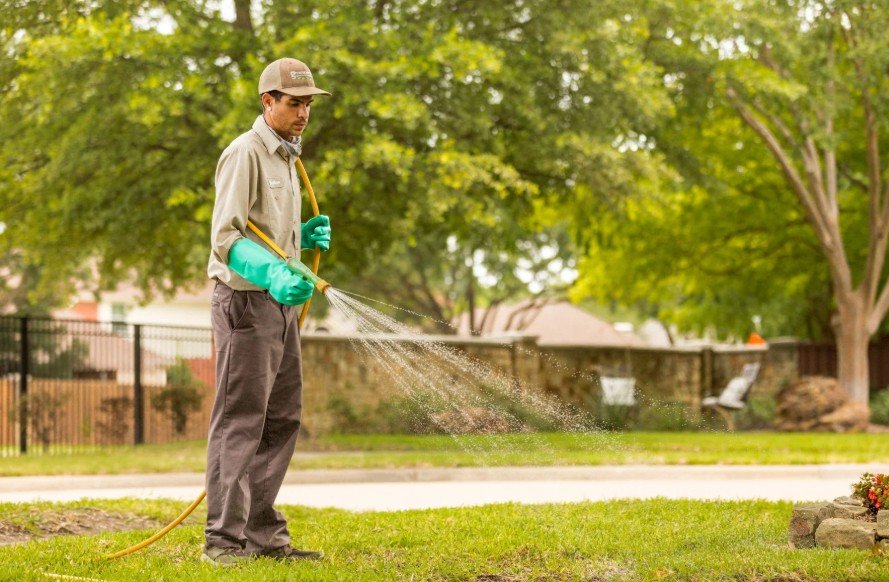
Plano homeowners can boast about having their green grass in the midst of the heat of a North Texas summer, where a nice lawn feels like a win. But perhaps unknown to most, the lawn treatment you just paid for may be routing unwanted visitors directly to your home. This means that when the outdoor ecosystem is affected by chemicals, pest animals, such as fire ants, chinch bugs, and even spiders, will start seeking alternative places to move. Well, the last time we needed such a distraction was now, when Plano has a humid subtropical climate that makes pest control a regular task year-round.
Knowing how lawn care affects bug activity will help you avoid pest problems that might have been avoided. If you have noticed an increase in bugs after your last lawn service, it may be worth consulting Saela Pest Control with local knowledge and expertise.
Signs Your Lawn Treatment Has Sparked a Pest Problem
- Increased indoor sightings: Within several days of starting your lawn regimen, you may notice ants, spiders, or roaches in your home.
- Pest trails near foundations: Rows of ants or other bugs traversing along walls or access points of your home
- Dead patches in unexpected areas: Not all lawn damage is bad, but when you spot new brown patches after treatment, it means that the pests
- Activity around mulch beds: Pests commonly move toward landscaped areas that are near the edge of your home
- Unusual bug clusters: Insects gathering on or outside your front door, house windows, or garage access door
Preventive Steps Before and After Lawn Care
1. Before Treatment
Book pest inspection at least one week prior to lawn service. The Texas A&M AgriLife Extension notes that the effect of correct timing can decrease pest displacement by up to 40{9a55f7f657bdb32d1ae108c710bdd923219d4839f84eb49fb995a88690968226}. Clear away any vegetation that comes within 12 inches of your foundation, fill and seal any visible cracks and openings around the outside of your home. This creates a barrier that pests cannot easily cross as they begin to move.
2. After Treatment
Wait for 24-48 hours and spray a perimeter pest treatment around your foundation. Water your lawn as directed by your service provider, as arid conditions can attract pests in search of moisture that may enter your home. Check things like door sweeps and window screens every other day for the first couple of weeks. According to a study conducted by the University of North Texas, Plano’s clay-rich soil retains chemicals differently than sandy soils, and pest activity patterns may shift for up to 3 weeks after treatment.
Why Lawn Treatments Trigger Pest Movement
Lawn treatments are like a bug “move out” notice. By the time fertilizers, herbicides, or pesticides reach your grass, they have already altered the ecosystem that these pests inhabit. Not only did the chemicals control weeds, but they also destroyed the entire microhabitat. The food sources they depended on are disappearing, their hiding places are being uncovered, and your cool, dark corners of the house are looking downright inviting.
Importance of Seasonal Pest Monitoring in Plano
The unique weather patterns in Plano create pest seasons that all homeowners should be aware of, especially as it warms enough to herald spring, when the return of fire ants and termites is imminent. Mosquitos and spiders are out in search of shade and water as summer’s heat drives them to seek shelter.
Local companies have adopted integrated approaches that account for seasonal shifts. One company, Saela Pest Control, has been assisting North Texas homeowners to align their pest control with their scheduled lawn care. Their treatment plans are designed to complement routine lawn care, rather than conflict with it. Their technicians are aware that the black clay soil of Plano, combined with its higher humidity, requires approaches different from those used in other regions of Texas.